
I
received a telephone call this morning from Hamish Marshall of BBC
Spotlight, asking to interview me as a dog training and behavioural
expert, regarding a terrible incident in Belmont Park, Exeter a few days
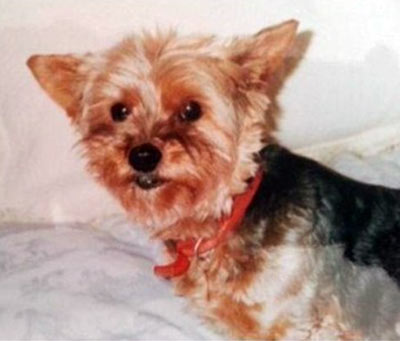
ago. Pensioner Diana Walton witnessed her 9-year-old Yorkie ‘Folly’,
being savaged to death, by what was initially reported as a Staffie, but
may have been a Pit Bull.
Unfortunately, I was otherwise committed, so could not appear on
Spotlight, but my views on this incident are fairly clear. There was an
immediate rush to point the finger at Staffie owners, with one person
being quoted in the Exeter Express and Echo, that 99% of Staffies were
owned by drug dealers. This is typical of the sweeping generalisations
being made about this much-maligned breed by some people who don’t know
what they are talking about. Yes, the breed has been hijacked to a
certain extent by criminals and chavs, but we must not forget that the
overwhelming majority are owned by decent, law-abiding people. It now
transpires that this may not have been a Staffie after all and the
Police are describing it as a Pit-bull type.
Someone said that the answer to the dangerous dog problems was to
license all dog breeders. Quite how this would make any difference
whatsoever to dog attacks, is not immediately obvious to me.
There are
thousands of dog breeders in this country, ranging from Kennel Club
accredited breeders (I myself am such a breeder), to hobby and
occasional breeders. There are thousands of perfectly decent puppies
bred every year by these hobby breeders and requiring them to be
licensed would be pointless, as well as impossible to enforce. The
criminal fraternity who breed pit-bull types certainly wouldn’t comply
with any legislation, that much is obvious (and of course most of their
dogs are cross breeds based on the Pit Bull type). If legislation
worked, we wouldn’t still have a pit-bull problem now, after all these
years since the Dangerous Dogs Act made them a banned breed. THERE ARE
HUNDREDS IN MOST MAJOR CITIES.
Exeter City Council are debating whether or not to require all dogs to
be kept on the lead in the park where this incident took place, but
again I don’t see this preventing attacks such as this one, as the
criminal element simply won’t obey the legislation. There are other
parks in Exeter where legislation is already in place and is blatantly
ignored by certain elements of the dog-owning public. Ditto the
dog-fouling issue, where the vast majority of law-abiding people clear
up after their dogs and a significant minority don’t bother. Existing
legislation in public spaces is not adequately enforced as there are
simply not enough enforcement officers to do it and the existing ones
need to be much more proactive than they are. Laws are only a deterrent
when there is a risk of being caught.
So, what’s to be done? The Police currently don’t show much interest in
dog on dog incidents because they aren’t covered by legislation and I
don’t think they should be wasting their time with minor incidents
involving dogs anyway. Surely though, serious attacks on other dogs like
Folly, should be subject to law enforcement measures and I
think there are grounds for looking at creating an offence where a dog
is dangerously out of control and seriously injures or kills another dog
in a public place. The Dangerous Dogs Act 1991is about to be amended and
will include attacks on people in private places in addition to public
places. Also included will be attacks on assistance dogs, but this will
be of little consolation to Diana Walton over the loss of Folly.
Legislating against entire groups of people ie breeders or entire breeds
of dog to deal with a minority, is not what’s required. I am a big
supporter of the ‘Deed not breed’ approach and certainly feel that where
offences are committed, penalties should be severe in certain
circumstances and certain offenders should be banned from owning or even
walking a dog, following conviction. At present, the dog often gets put
to sleep whereas the person responsible due to lack of control and
responsibility, gets off with minimal punishment.
PETER MOUNSEY ASHCLYST DOG TRAINING AND BEHAVIOUR DEVON. SEPT. 2013